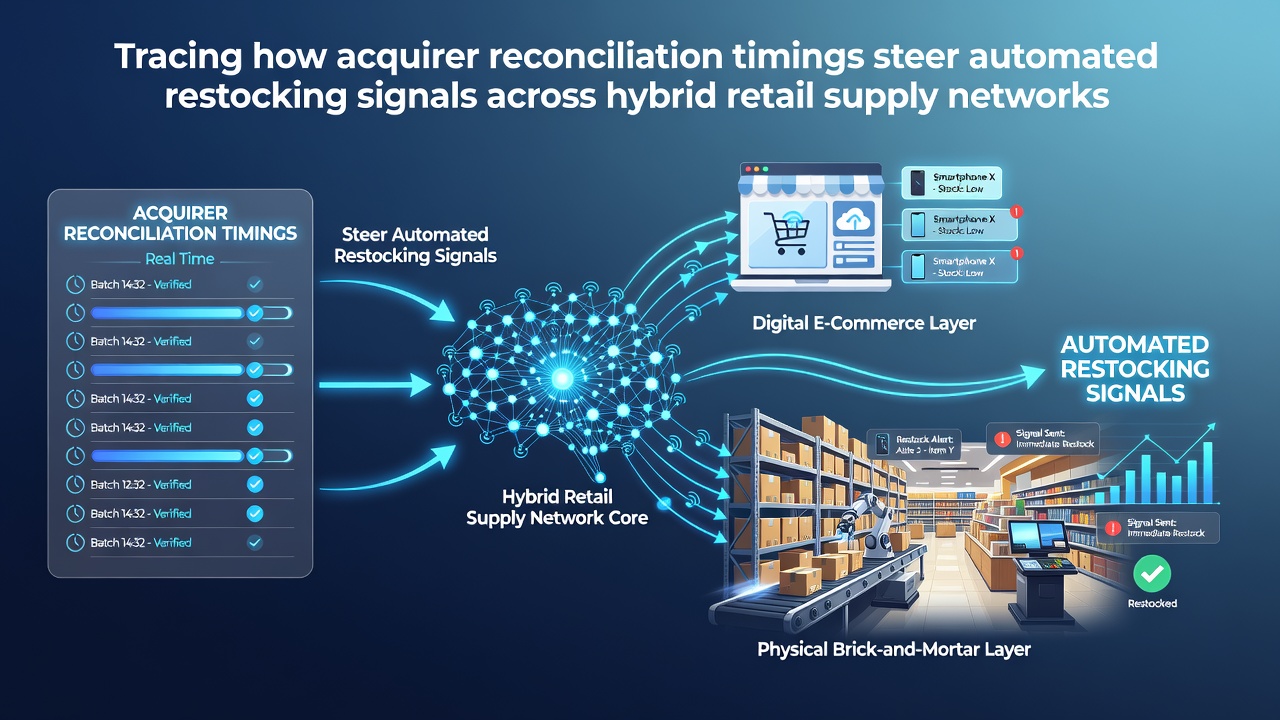
Tracing How Acquirer Reconciliation Timings Steer Automated Restocking Signals Across Hybrid Retail Supply Networks
Acquirer reconciliation timings determine when transaction batches from hybrid retail operations settle and feed into automated inventory systems. These cycles connect payment processors with warehouse management platforms, allowing restocking signals to activate based on verified sales data rather than initial authorizations. In practice, the delay between authorization and final reconciliation shapes how quickly physical stores and online channels trigger replenishment orders across shared supply networks.
Mechanics of Acquirer Reconciliation in Retail Payments
Acquiring banks process batches from point-of-sale terminals and digital gateways in scheduled windows that typically span one to three days depending on merchant agreements and card network rules. Observers note that reconciliation occurs after the acquirer matches authorizations against clearing files received from card networks, which then releases funds and generates the settled transaction records. These records carry timestamps that downstream systems use to distinguish confirmed sales from pending holds.
Retailers operating both in-store and online channels rely on this settled data to update unified inventory databases. When reconciliation completes, the resulting files transmit through middleware layers that map payment outcomes to stock-keeping units, prompting automated purchase orders once predefined thresholds are met. Studies from supply chain analysts show that variations in these timings affect the frequency of restocking alerts, particularly during periods of high transaction volume such as holiday seasons.
Signal Flow from Settlement to Warehouse Automation
Once acquirers finalize reconciliation, the data streams reach enterprise resource planning platforms that integrate with warehouse automation tools. Researchers have documented cases where settlement files arriving before a daily cutoff generate immediate restocking signals for fast-moving items, while delayed batches push those signals into the next operational cycle. This timing difference influences how hybrid retailers allocate inventory between physical shelves and e-commerce fulfillment centers that share the same distribution points.
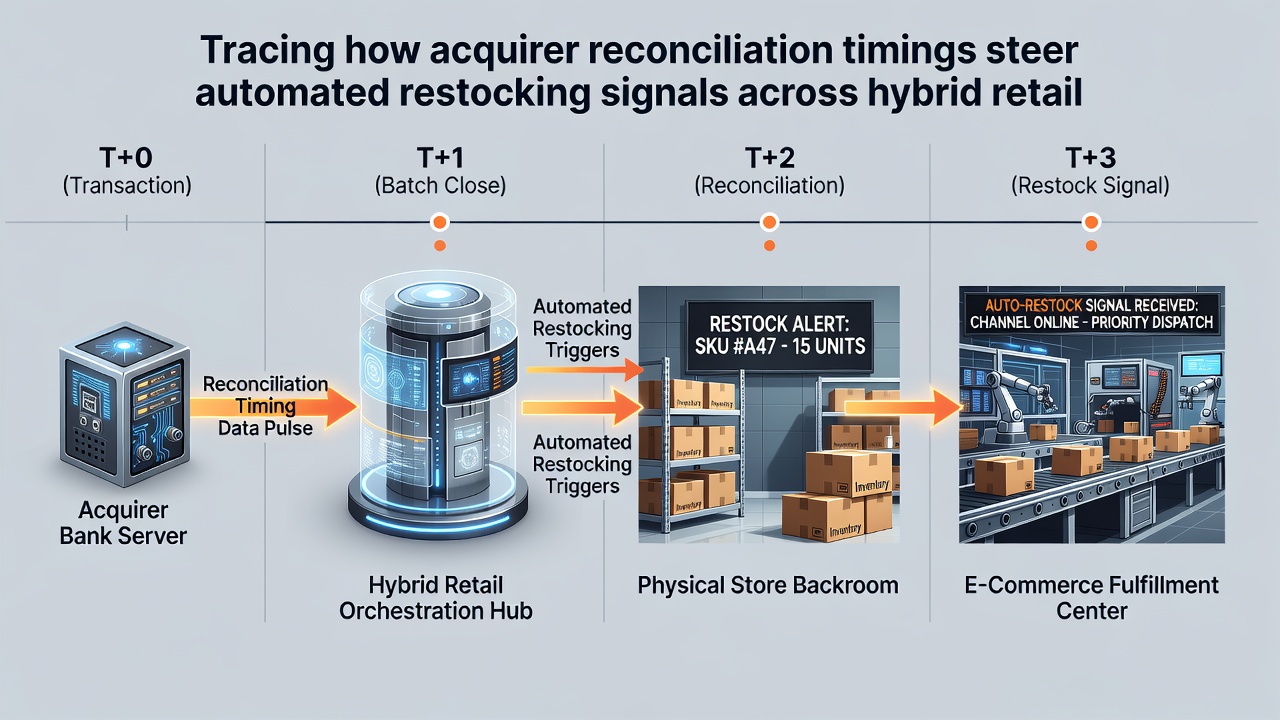
Industry reports indicate that European retailers using unified commerce platforms experienced measurable shifts in reorder patterns after aligning their settlement schedules with acquirer cutoffs in 2025. Data from the European Central Bank on payment processing volumes reveals that merchants who synchronized their internal clocks with reconciliation windows reduced instances of over-ordering by coordinating restock triggers more precisely with confirmed revenue figures. Similar patterns appear in North American operations where batch settlement occurs on a T+2 basis for many card types.
Hybrid Network Considerations and Timing Variations
Hybrid retail supply networks combine countertop devices with online gateways, creating multiple entry points for transaction data that must converge before reconciliation. Acquirers apply different processing rhythms to card-present and card-not-present batches, which can stagger the arrival of settled records in central systems. Those managing these networks often configure rules engines to prioritize signals from reconciled batches over provisional authorization data, preventing premature restocking that might duplicate orders across channels.
In November 2026, several large chains plan to test new API connections that pull reconciliation status directly from acquirer dashboards into supply chain dashboards. This approach builds on existing middleware that already translates batch files into inventory events. Observers tracking these developments note that the change could compress the window between sale confirmation and automated reorder by several hours in multi-channel environments.
Canadian retail associations have published guidance on aligning payment settlement cycles with inventory management protocols, emphasizing the need for consistent data formats across acquirers. These guidelines highlight how mismatched timing between physical store batches and online gateway settlements can create temporary discrepancies in shared stock visibility, leading operators to implement buffer logic that holds restocking signals until full reconciliation completes.
Impact on Forecasting Accuracy Across Channels
Accurate restocking depends on distinguishing settled sales from authorizations that may later decline or reverse. Reconciliation timings provide the verification layer that inventory algorithms require to update demand forecasts. Retailers using these signals report fewer instances of phantom stock depletion because the systems wait for confirmed settlement before adjusting reorder points.
Academic research on retail operations has examined how settlement delays propagate through supply networks, particularly when acquirers handle international card transactions that involve additional clearing steps. The resulting lag influences how quickly hybrid models can respond to regional demand spikes without overcommitting warehouse resources.
Conclusion
Acquirer reconciliation timings serve as the control point that directs verified sales data into automated restocking mechanisms across hybrid retail supply networks. The structured flow from batch processing through settlement files to warehouse triggers determines the responsiveness of inventory systems that support both physical and digital sales channels. Retailers continue to refine these connections as payment processors introduce faster reconciliation options and supply chain platforms gain direct access to settlement status updates.